

The Intention Premium: Why Less Often Can Mean More Meaningful
Because value isn’t in the volume. It’s in what you choose to notice.

Reading time approx. 5 minutes
Good morning. Let's start this Tuesday together. Because, as always, "It is perfectly possible to be both rational and wrong."
Visual Nugget Summary
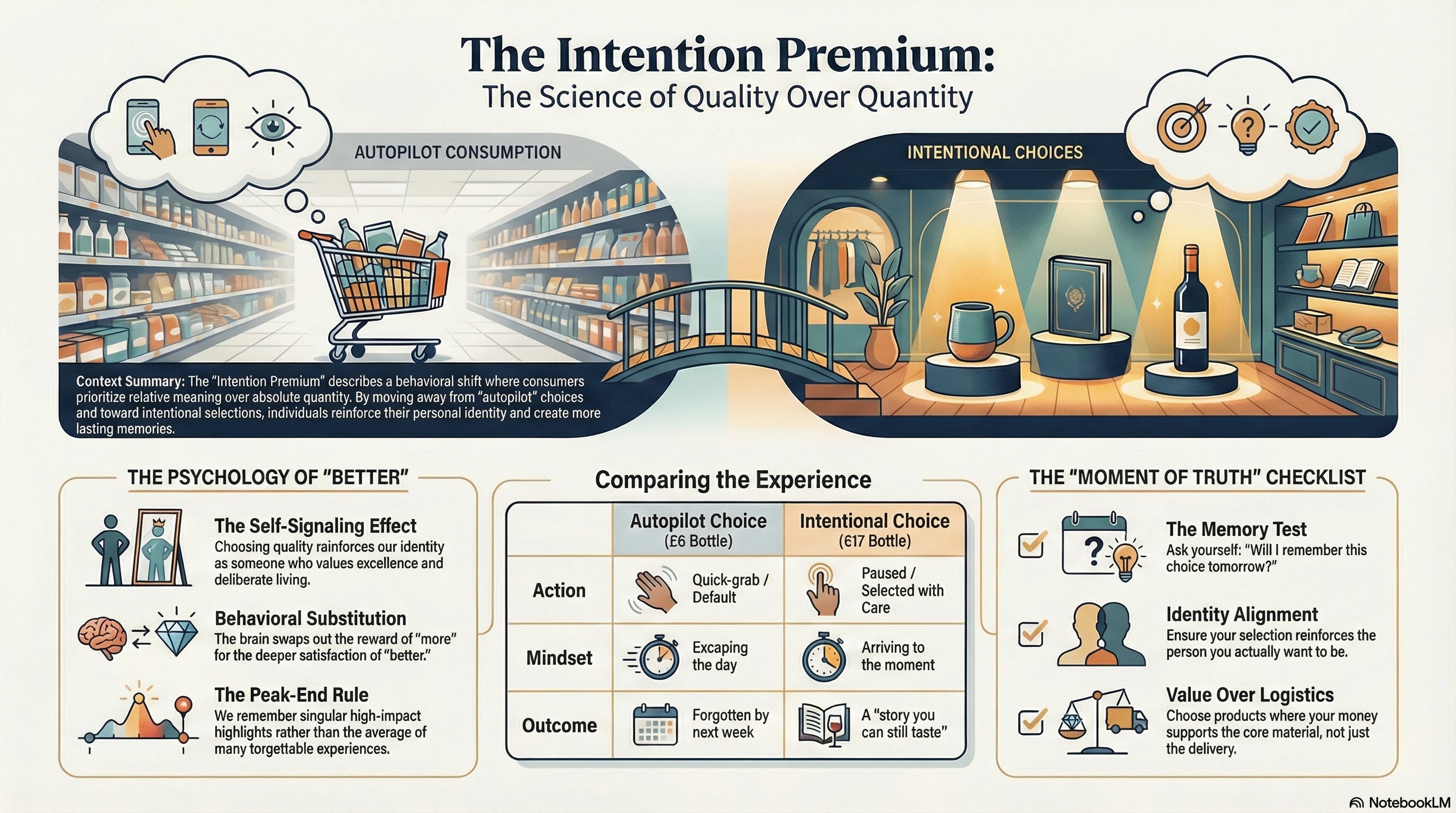
Let me tell you about a Tuesday night a few months ago.
It was pouring rain. I was tired, grumpy, and had just ploughed through another long meeting that could’ve been an email. Normally, this is where autopilot would kick in: the £6 bottle of red on offer, a lazy Netflix scroll, a background blur of a drink.
But that night, I paused. I reached past the quick-grab bottle and opened one I’d been saving. Not absurdly expensive. Just intentional. A €17 bottle from the south of France, picked weeks earlier after a conversation with a shopkeeper who looked like he might also repair bicycles for fun. I remembered what he said: “It’s not the wine. It’s the memory it makes.”
And it was different. I slowed down. I cooked instead of ordering. I looked at the label, smelled the wine before sipping, even made a little toast (to nobody in particular). It felt… ceremonial.
That wasn’t about luxury. That was about attention.
It’s easy to dismiss this kind of choice as indulgence. But it wasn’t. It was focus. I wasn’t drinking to escape. I was drinking to arrive, to the moment, to the meal, to myself.
And that tiny shift from “wine” to “this wine, right now, for this reason”, changed the entire evening.
How Does It Work? Science, Baby!
This shift from quantity to quality is a textbook case of behavioral substitution: when the brain swaps out one reward structure (more) for another (better).
We used to think consumption was a volume game. More meant success, pleasure, progress. But in recent decades, behavioral economists have shown we care far less about absolute quantity and far more about relative meaning. What matters is how something feels, not how much of it there is.
Rory Sutherland describes it beautifully: people don’t maximise utility - they maximise the feeling of having made a good decision. The £20 bottle doesn’t just contain better wine. It delivers a better story about ourselves to ourselves. We feel intentional, savvy, elevated.
Cognitive psychology calls this self-signaling. When we choose quality, we’re not just consuming, but instead we’re reinforcing identity: “I am someone who chooses well.” Add to that the peak-end rule (where we remember the highlights of an experience, not its average), and a single, deliberate wine moment beats five forgettable ones every time.
What we drink, or consume more broadly, is becoming a medium for self-definition, not just self-soothing.
📚 Quick side note: My book Drive Method is there. Interested in more deep insights about behavioral economics? Then this book is for you.
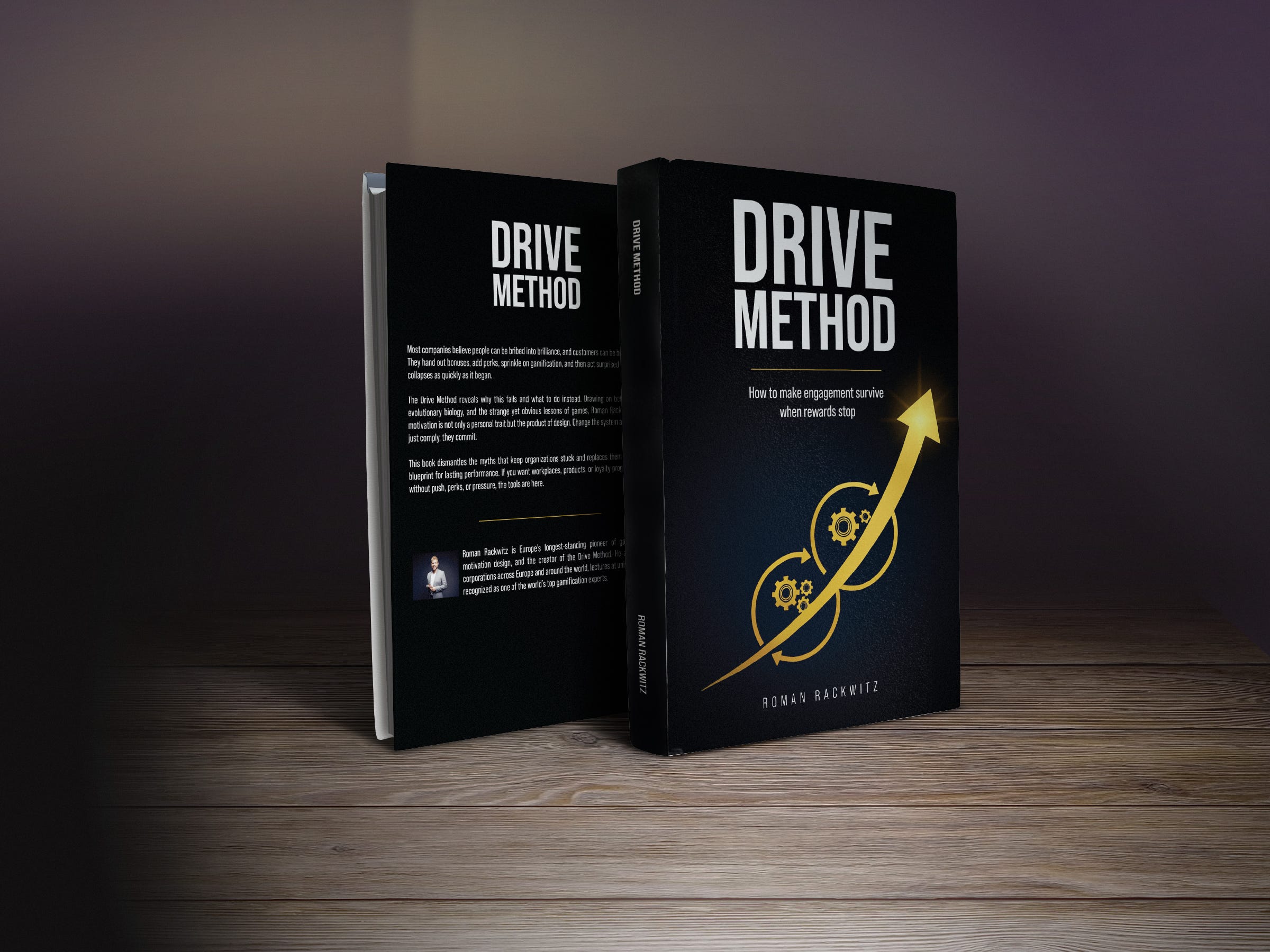
“What struck me most in this book is its focus on execution. This isn’t just another book about motivation theories, it’s a clear, actionable roadmap to designing lasting commitment. Roman draws from behavioral science, evolutionary biology, and game design to show that motivation isn’t a personal trait, it’s a product of design.
If you want to understand how to build systems where people don’t just comply but commit, this is a must-read. A brilliant work from one of Europe’s pioneers in gamification and motivation design!”Nicolas Babin (Business Strategist | LinkedIn Top Voice | Driving Innovation & Growth | Serial Entrepreneur (26 Startups) | Board Member | Author of The Talking Dog)
Why This Is Important?
We tend to think “less” means loss. But psychology tells us that less - when chosen with care - often amplifies meaning, memory, and satisfaction.
We’re surrounded by noise, and it’s getting harder to notice what actually makes us feel good, not just busy or full or numbed out. The Intention Premium offers a quiet rebellion against default living.
Let’s zoom out.
From wine to wellness, from wardrobe to work hours, we are seeing a collective shift away from more to better. Not better in the sense of designer brands or price tags, but in terms of fit, resonance, value per unit of attention. People are increasingly making choices that tell a story about themselves, their priorities, and their time.
This matters for anyone who leads teams, builds products, markets services, or wants to navigate the world with a little more awareness.
Because when consumers start paying with their intentions instead of just their wallets, every lazy option loses ground. That affects how we design experiences, price goods, and communicate value.
It’s not just about wine. It’s about what gets remembered.
That Tuesday night with a glass of €17 red became a story I can still taste. I’ve forgotten the £6 bottle I drank the week before. I think I watched something with Ryan Reynolds. Or was it Jason Bateman?
And Now?
Next time you’re choosing something, no matter if it is a wine, dinner, or even which email to answer first, ask yourself: Will I remember this?
Try this:
Replace “What’s cheapest or fastest?” with “What will feel intentional?”
Let your budget stretch not to more, but to meaning.
Pause before grabbing your default, and choose once, but with care.
Look for products or services where more of your money goes to what matters. In wine, it’s liquid. In coffee, it’s beans. In clothes, it’s fabric and ethics.
Sometimes, “less but better” isn’t just a consumption philosophy. It’s a life posture.
Bottom Line
People don’t always want more. They want more meaning per choice.
Checklist for the moment of truth:
Am I choosing this because I want it, or because it’s there?
If I slowed down, would I pick differently?
Does the price reflect value, or logistics?
Will I remember this tomorrow?
Does this choice reinforce who I want to be?
Chief Behavioral Officer wanted
Where are management decisions made every day that are still based on people acting logically? Where can you be a Chief Behavioral Officer yourself this week?
See you next time.
If you would like to send us any tips or feedback, please email us at redaktion@cbo.news. Thank you very much.